
Monday, April 14, 2014
Hardy-Weinberg Theorem
This week in AP Biology we talked about the Hardy-Weinberg Theorem. The Hardy-Weinberg Theorem states that allele and genotype frequencies in a population will remain constant from generation to generation in the absence of other evolutionary influences. In Hardy-Weinberg, the numbers you have must add to 1. And there are two different equations one to find the alleles is p + q = 1 and the other one to find individuals is 2pq+q(squared) = 1. You can also combine the Hardy-Weinberg theorem with the Chi Square equation.

Monday, April 7, 2014
Evolution
This week in AP Biology we talked about evolution. Evolution is a very interesting subject. Learning about common ancestors that a species has and how the species has evolved over time. Charles Darwin was one of the first people to really go in depth about evolution. He traveled around the world on the HMS Beagle and during his travels he stopped at the Galapagos Islands and started studying all of the species and fossils that lived on the island and noticed that some species had similar characteristics as other species he has seen before. Homology is when there is a similarity in characteristics resulting in a shared ancestor which is what Darwin saw. Vestigial structures is when there is a structure that is useless to the organism. For example in the Galapagos Islands there is a flightless bird called the cormorant, but there is a cormorant that can fly, but it is not in the Galapagos Island. Both are the same bird, but one can fly while the other cannot. The reason being is because the cormorant in the Galapagos Islands does not have a need to fly, since it is surrounded by water, it dives and swims for it's food. While the cormorant that can fly depends on its wings for food and other necessities. Evolution is a very interesting subject to learn about and so far it is my favorite topic this whole school year.


Monday, March 24, 2014
Viruses
This week in AP Biology we talked about viruses. Viruses are very tiny and there genomes can be double or single stranded DNA or double or single stranded RNA. Viruses have a capsid which is a protein shell that surrounds the genetic material. Some viruses have viral envelopes that surround the capsid and aid the viruses in infecting their hosts. A type of bacteria we studied the most was bacteriophages or phages. They are viruses that infect bacterial cells. Viruses can only replicate in host cells which means they can infect limited variety of hosts. There are two viral reproductions. One is called the Lytic cycle and the other is the Lysogenic cycle. The lytic cycle ends in the death of the host cell by rupturing. Bacteriophages injects its DNA into a host cell and takes over the host cell's machinery to synthesize new copies of the viral DNA. In the lysogenic cycle the bacteriophage's DNA becomes incorporated into the host cell's DNA and is replicated along with the host cell's genome.

Monday, March 10, 2014
Gene Expressin
This week in AP Biology we talked about gene expression. Gene expression is the process by which information from a gene is used in synthesis of a functional gene product. These products are usually proteins.There are three steps to gene expression. The first step is transcription and it is the synthesis of RNA using DNA as a template and also produces mRNA. The second step is RNA processing. The mRNA that was made in transcription goes to RNA processing to yield the final mRNA. The final step is translation. Translation is the production of a polypeptide chain using using the mRNA transcript.

Sunday, March 2, 2014
DNA Replication
This week in AP Biology we talked about DNA replication. DNA replication is the process by which a DNA molecule is copied, and how cells repair their DNA. DNA replication is a very important process in all living things. The replication of a DNA molecule begins in particular sites called origin of replication. Initiation proteins bind to the the origin of replication and separate the two strands which form a replication bubble. Then the DNA moves in both directions of the DNA strand until it is copied. DNA polymerase adds nucelotides to the growing chain working in a 5` to 3` direction. The replication occurs continuously along the 5` to 3` strand, this is called the leading strand and the strand that runs 3` to 5` is copied in segments and it is called the lagging strand. The lagging strand is synthesized in Okazaki fragments which are sealed together by DNA ligase which then forms a continuous DNA strand.

Friday, February 21, 2014
The History of DNA
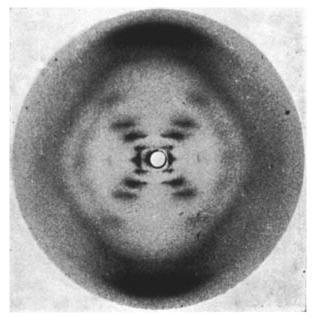
This week in AP Biology we talked about all of the different scientists and other geniuses that proved certain characteristics of DNA. The first was T.H Morgan and he worked with fruit flies and saw that genes are on chromosomes. The second person was Fredeirick Griffith and he worked to try and find a cure for pneumonia. From doing this he saw that harmless live bacteria mixed with heat-killed infectious bacteria caused disease in mice. Griffith called this substance that passed from dead bacteria to live bacteria the transforming factor or transformation. Avery, McCarty, and Macleod also looked for this transforming factor by purifying both DNA and proteins from streptococcus pneumonia bacteria. They found that when they injected protein in bacteria that there was no effect, but when they injected DNA in bacteria, they saw that it transformed harmless bacteria into virulent bacteria. Hershey and Chase, yet more scientist that worked with the transforming factor, but Hershey and Chase confirmed that DNA is the transforming factor by doing the blender experiment. They worked bacteriophage which is a virus that infects bacteria. They grew phage viruses in 2 media radioactively labeled. This blender experiment is how they confirmed that DNA is the transforming factor. Erwin Chargaff saw that all 4 bases of DNA are not in equal amounts. Adenine is 30.9%, Thymine is 29.4%, Guanine is 19.9% and Cytosine is 19.8% of a humans DNA. Watson and Crick simply developed the double helix structure of DNA. A woman named Rosalind Franklin is what gave Watson and Crick to make the double helix structure. And the final two people we discussed is Meselson and Stahl. Meselson and Stahl proved that DNA is semi conservative which is when two strands of DNA separate and one strand is a template and the new strand is laid down. All of these scientist are very important because of their discoveries about DNA.


Sunday, February 16, 2014
Chi Square
This week in AP biology we learned a very important formula called chi square. Chi square is relating to or denoting a statistical method assessing the goodness of fit between observed values and those expected. Chi square as an odd looking formula, (which I will put a picture of at the end of the blog) the odd looking E stands for summation or the sum, the O means what was observed and the regular E means what you expected. If there are multiple observations and expectations, you add each one. For example you have 1600 cards with four suits. You would expect 400 cards of each suit, but when you count the cards, the number is completely random. So you would have to subtract the observed from the expected, then square that number, than divide that number by the expected number, and you will have to continue doing that for each suit of cards and add up each answer to get the final answer. Once you get the final answer, you have to look at your degrees of freedom chart and in our AP Biology class, we look at the .05 chart which means that we are 95% sure. A very important thing to know about the degrees of freedom is that you see how many observation there are and subtract it by one. So if there are 4 observations, you would look at the third degree of freedom. Also if the final answer you got from doing chi square is lower than the degrees of freedom, it accepts the null hypothesis and if its higher, it declines it. The null hypothesis is when there is no significant difference between what is observed and what is observed. Chi square is pretty simple and easy to do once you get the hang of it.


Sunday, February 9, 2014
Genetics (The Basics)
This week in AP Biology we talked about genetics.Genetics is the study of heredity and heredity is a process where a parent passes certain genes to their offspring. The main thing we discussed this week is Mendelian Genetics, which is pretty much mainly focused around punnet squares. Punnet squares are a diagram that predicts the outcome of offspring. For this to work you need the genotype from the father and the mother. A genotype is the genetic makeup of an organism. The genotype in a punnet square are the letters that stand for one or several genotypes in the mother and father. Another thing we talked about were recessive and dominant alleles. Recessive alleles are alleles that are suppressed when a dominant allele is present and a dominant allele is an allele that always shows up unless there is a homozygous recessive allele present. Genetics is a very simple subject to learn about, but it is also extremely interesting to talk about as well.


Sunday, February 2, 2014
Genetics
This week in AP Biology we talked about genetics. In the beginning of the week, we went to a genetics conference at Lubbock. The conference was really interesting! The beginning of the conference wasn't all that interesting, but once we got into cloning, that's when it became extremely interesting. In the conference, scientist have learned that you can take human skin and turn them into stem cells to make a tiny human brain. Another thing that was really interesting at the conference was that scientist are trying to make a thing similar to a fountain of youth. Researchers and scientist are trying to make people who are in their 60's, 70's and so forth, to make them look like how they looked when they were in their 20's or 30's. Scientist are getting closer and closer to be able to clone humans. Since they have cloned goats, horses, and several other animals, they are getting really close to cloning a human. Even though most people and scientists say that it cannot be done because it is to complex, but researchers are figuring out a to make it possible. In my opinion I do not think it is a good idea to clone a human because people can take advantage of this and do crazy bad things. Another thing researches and scientist are trying to do is being able to cure diseases such as Parkinson's, Lou Gherig's Disease. And another thing they are trying to cure is diabetes. All of this is really crazy to think about. Diseases and other issues are starting to become a reality. Like the speaker at the genetics conference Sam Rhine said, science fiction, is more amazing than science fiction.


Sunday, January 26, 2014
Meiosis Lab
This week in AP Biology we did a lab over meiosis. In the lab we had red and pink beads and a yellow magnet. With these things we had to make chromosomes and make an illustration with the beads to make them look like they are in interphase, prophase, metaphase, anaphase and telophase in mitosis and also the exact same but in meiosis. After that we had to get cards with a picture of crossing over. We had to count how many were in a 4:4 ratio or 2:2:2 ratio and so on and so forth. Once that was done, we would then have to find the percentages of ratios. The final thing we did was on the first day we started the lab, we put onion pieces in sand soaked in water and let them sit in a drawer for a few days, so the onions will start to grow tips. We would then cut the tips and put them on a microscope slide with hydrochloric acid on the onion tip and then put it over a flame for 5 seconds. Once that was finished we had to put this special substance on the onion tip ( I forgot the name of it :( ) and put it over a flame for about 2 minutes. We would then put it under a microscope a look to find the stages of interphase, prophase ,metaphase, anaphase and telophase.


Sunday, January 19, 2014
Meiosis
This week in AP Biology we discussed about meiosis. Meiosis is a type of cell division that results in four daughter cells each with half the number of chromosomes of the parent cell, as in production of gametes and plant spores. Meiosis has two cell divisions, Meiosis I and Meiosis II. Meiosis I halves the number of chromosomes, while in Meiosis II, sister chromotids split. Just like mitosis, meiosis goes through Prophase, Metaphase, Anaphase, Telophase, and Cytokensis, but these phases produce gametes and to simply make you, you. In Interphase I, DNA replicates and each chromosome becomes doubled.In Prophase I, crossing over occurs which makes two homolougous chromosomes line up next to each other. Once crossing over occurs, the chromosomes are no longer identical. In Metaphase I, homologous chromosomes line up along the equator of the cell. In Anaphase I, chromosomes pull apart from opposite ends of the cell. In Telophase I, the spindle fibers disintegrate and cytokinesis begins. Once cytokinesis is complete, Meiosis II begins. Meiosis II is very similar to mitosis. In Prophase II, the spindle fibers start to form. In metaphase II The chromosomes line up and each cell has only one of each homologous chromosome. In anaphase II, the sister chromotids move away from each other and in telophase II and cytokinesis, the formation of four genetically different haploid cells form.

Sunday, January 12, 2014
The Cell Cycle
 This week in AP Biology we talked about the cell cycle. The cell cycle is the life of a cell from the time it is first formed from a dividing parent cell until its own division into two cells. Without the cell cycle, our body would not be able to function how it does. Such as when you get a cut, it eventually heals because of mitosis.There are seven phases in the cell cycle. G1, Interphase, S, G2, Mitosis, M, and Cytokinesis. Each phase has a different job. In G1 the cell grows while carrying out cell functions unique to its cell type. In S phase the cell continues to carry put its unique functions. it also duplicates its chromosomes. The G2 phase is just the gap after the chromosomes have been duplicated and just before mitosis. Mitosis is a type of cell division that generates new cells for growth and repair. Cytokinesis is the division of the cell's cytoplasm. In the M phase, cell division occurs for a short amount of time the contents of the nucleus are evenly distributed to two daughter nuclei, and the cytoplasm divides in two. The other phases are Prophase, Metaphase, Anaphase, Telophase. In Prophase the chromatin becomes more tightly coiled into discrete chromosomes. In Metapahse, The microtubules move the chromosomes to the metaphase plate at the equator of the cell. In Anaphase, Sister chromatids begin to seperate, pulled apart by motor molecules interacting with kinetochore microtubules. In Telophase the nuclear envelopes re-form around the sets of chromosomes located at opposite ends of the cell. The cell cycle is a very important process to humans and animals. Without it, our body will not be or act how it does now.

Saturday, December 14, 2013
Photosynthesis Lab
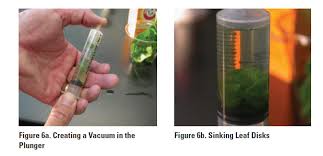
This week in AP Biology we did a lab on plant pigments and photosynthesis. In the first part of the lab you get a piece of chromatoraphy paper and rub a spinach leaf on top of it with a quarter, so the pigment of the spinach leaf will be on the paper. You then put the tip of the chromatography paper into an alcoholic solvent, so the pigments will travel up the paper. When the pigments are completely done traveling up the paper, you measure where each pigment ends ( carotene, chlorophyll a, chlorophyll b) and you calculate Rf values by dividing the pigment with the solvent. In the second part of the lab you get a spinach leaf and use a hole puncher to punch holes in the leaf to make leaf discs. After that you put the leaf discs in a syringe. Once the leaf discs are in the syringe, you fill the syringe up with. When the leaf discs are in the syringe with the solution make sure to make the leafs sink to the bottom by vacuuming the air out. Once the leafs are sunk, you then put the leaf discs into a solution which is mixed with water and baking soda (which gives off carbon dioxide) and you put the the leaf discs under a light source and calculate how many float to the top every 30 seconds.



Saturday, December 7, 2013
Photosynthesis
This week in AP Biology we discussed about photosynthesis. Photosynthesis is the process where plants use sunlight to synthesis their food from carbon dioxide and water. I have been taught photosynthesis since elementary, but I never knew how complicated and complex it really was until we started learning about it in depth. Photosynthesis occurs in the chloroplast of the plant.There are two parts to photosynthesis, and they are the light reaction and the Calvin Cycle (also known as the dark reaction) . The light reaction occurs in the thylakoid membrane and it converts light energy to make chemical energy. The light that is absorbed is used to make ATP and also produces NADPH. The Calvin Cycle uses ATP as an energy source and also consumes NADPH so it can add high energy electrons to make glucose (sugar). There are three phases in the Calving Cycle. The first phase is called Carbon Fixation which is when carbon dioxide is made into a five carbon sugar called ribulose biphosphate or RuBP. The second phase is Reduction which is when ATP and NADPH are used to convert 3 phosphoglycerate to glyceraldehyde 3 phosphate which is the predecessor to glucose and other sugars. And finally the third phase is Regeneration. Regeneration is when even more ATP is used to convert glyceraldehyde 3 phosphate back to RuBP (which is the acceptor for carbon dioxide) so the cycle is complete. For the Calvin Cycle to continue this, the light reaction must continue regenerating ATP and NADPH. Without photosynthesis, anything that needs oxygen to survive will not be alive without it. Photosynthesis is one of the most important processes to occur.


Sunday, November 24, 2013
Successful Blog
 This week in AP Biology we redid our lab, and this time it was a success. To prevent the vials from getting water leaked into it, we used super glue instead of petroleum jelly which is what we used at first and that is how the lab failed last week. The purpose of the lab is to get germinated and nongerminated peas and put them in 6 vials with a cotton ball soaked in KOH. The vials 1-3 are placed in a room temperature bath and vials 4-6 are placed in a chilled waterbath. After that is done, you then place the 6 respirometers on each vial and place them in their designated waterbath. With the vials successfully done, we could now get the data we needed. This data was to show the relationship of gas laws to the function of a respirometer and the effect of temperature and germination or nongermination on cell respiration. The germinating peas consumed the most oxygen in both the room temperature waterbath and the chilled waterbath because it performs cellular respiration while the others do not. The lab seems fairly simple, but it is a very tedious process.

Saturday, November 16, 2013
Unsuccessful Week
This week in AP Biology, our class attempted to do a lab about cellular respiration. There are previous blogs that explains cellular respiration and the steps that occur. This lab turned out to be a complete fail. I was not able to see the start of the lab because of an extracurricular activity, so I can't really explain the whole process, but the purpose of the lab is to demonstrate the relationship of gas laws, the effect of temperature and germination or nongermination on cell respiration, and the relationship between dependent and independent values. Like I said, I was not in class during the start of the lab, so I will not know as much or be able to explain it very well. However, the purpose of the lab is to get germinated and nongerminated peas and put them in 6 vials which has a cotton soaked with KOH. 1-3 is placed in a room temperature bath and 4-6 is placed in a chilled waterbath. After that, you place 6 respirometers in the waterbaths, but our respirometers got water leaked inside, so it ruined the lab. If the respirometers did not get water inside, then we would have to record the volume.
Saturday, November 9, 2013
3 Steps Of Cellular Respiration
This week in AP Biology we continued discussing cellular respiration once again. Since we have a quiz this week, we just reviewed about cellular respiration and the three steps of cellular respiration. These three steps are glycolysis, Kreb's Cycle ( citric acid cycle) and Electron Transport Chain (ETC). Each step works differently, but they each produce energy in the form of ATP. Glycolysis occurs outside the mitochindria and it breaks down glucose into two molecules called a pyruvate and also produces 2 ATP's and 2 NADH molecules. The Kreb;s Cycle, which is also known as the citric acid cycle. The Kreb;s cycle occurs in the mitochondria where the pyruvates are transported and loses carbon dioxide to form acetyl CoA and later makes 2 ATP's, NADH and FADH. And finally ETC (also known as Oxidative Phosphorylation) also occurs in the mitochondria and it releases a large amount of chemical energy to produce about 34 ATP's. These are the three steps of cellular respiration.

Saturday, November 2, 2013
Cellular Respiration
This week in AP Biology we talked about cellular respiration. Cellular respiration is the metabolic process whereby certain organisms obtain energy from organic molecules. Without cellular respiration, no organism would be able to acquire energy. Another thing we discussed in class was aerobic and anaerobic respiration. Aerobic uses oxygen while anaerobic does not use oxygen. Also anaerobic produces lactic acid while aerobic does not. Lactic acid is produced in the muscle tissues during an intense exercise. That is why when someone gets done with a difficult workout they pant for oxygen because your body is getting all of the lactic acid out and taking oxygen in. There are three steps in cellular respiration, and they are glycolisis, Kreb's cycle, and Electron Transport Chain (ETC). Each one of these steps build up on each other to make several ATP's. (I don't know the cycle very well enough as of now to explain it very thoroughly). Cellular respiration is very important to any organism because we need energy to make our body work properly.

Friday, October 25, 2013
Gibbs Free Enegy
This week in AP Biology we talked about Gibbs Free Energy. Gibbs Free Energy is a bit confusing, but after a while you start getting the hang of it (I don't know it well enough to explain it very well). Free Energy is very important in the universe. Without Free Energy, then nothing would be the same and our body wouldn't be able to function as quickly as it does now. Another thing we talked about in class is enzymes. Enzymes are simply proteins that speed up reactions. If we didn't have enzymes then it would take years and years and years to even digest the simplest things. Another thing we talked about is metabolism. A metabolism is the chemical processes that occur within a living organism in order to maintain life. Without any of these things, our body would not be able to function as well as it does now.


Saturday, October 19, 2013
Osmosis & Diffusion
This week in AP Biology we didn't really discuss about much because of a lab we are doing in class(which we still haven't completed), so we pretty much reviewed what we learned last week. But most parts in the lab is about osmosis and diffusion, which is something we talked about last week. Osmosis is the movement of water in a cell and diffusion is the movement between other materials in a cell. Without osmosis or diffusion, our body would not be able to transport all of the nutrients from the food we eat and drink.Both osmosis and diffusion have similarities and differences. For example diffusion occurs in a gaseous state while osmosis does not and diffusion moves from high to low and osmosis is vice versa. Like I said, we didn't discuss about a whole this week because of an important lab, but either way it was still interesting to talk about osmosis and diffusion in detail again.

Subscribe to:
Posts (Atom)